Tuesday, 20 January 2009

Sun-Tzu and the art of bicycle fighting


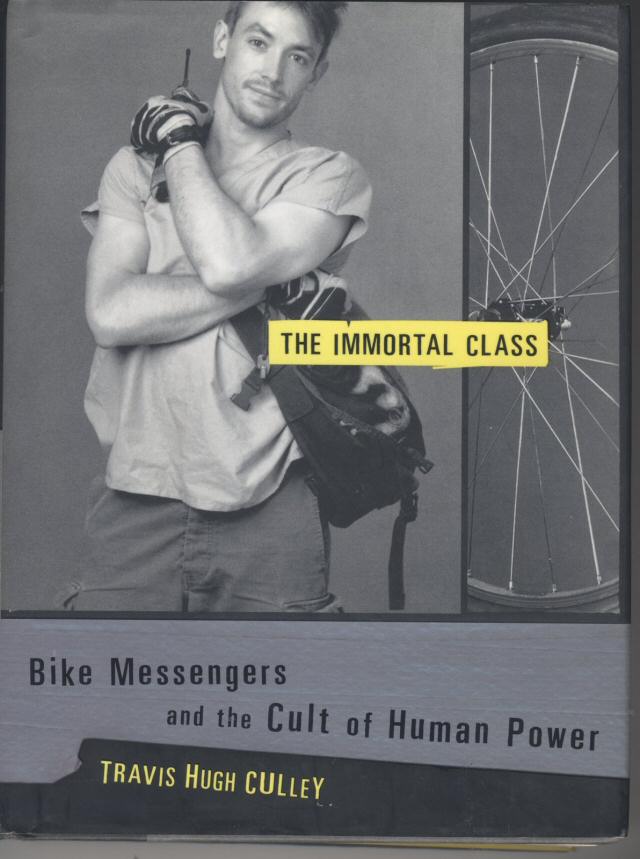
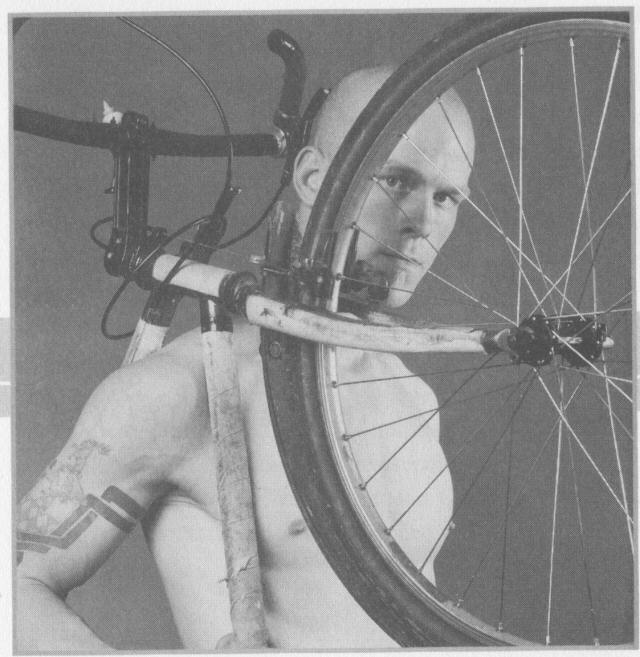
The tattooed guy shown in this picture is out of the hardcover edition of ‘The Immortal Class’ by Travis Hugh Culley (also published in Italy as ‘Il Messagero‘).

I read ‘The immortal class’  a few years ago and remember it fondly. Maybe I’m exaggerating but it’s almost a sort of ‘90s ‘Zen and the art of messenger biking’. Anybody interested in (urban) cycling should read it. The strange journey of this playwright-turned-bike-messenger is an interesting story. The need to market always newer and costlier cars and motorbikes, and their place in our minds as status symbols, usually leads to depict the humble urban cyclist as a some kind of dork. It’s not exactly like that. And this book shows it.

If I remember correctly the same year I read Culley’s book was the last time I had a fight, that is, a physical exchange of punches with an unknown stranger. This kind of fights are almost always a Bad Thing. In order not to end up with a bunch of legal problems I didn’t need, let’s say that I exited the fight …slightly bruised. Why do I remember this? Because it was a fight with a moped driver, after driving my bike. Why I remember this in connection with the guy from ‘The immortal class’? Well, last week I was almost killed by a young lady driving  a blue Punto at a road crossing. I was moving quietly along my side of the road, I let myself be seen, and the car didn’t stop when it should have. When I dared to complain the young lady’s boyfriend and father stormed out of the car, and not with the best intentions towards your truly. A handgun was mentioned. Well, I don’t know if this was due to the subconscious memory of that photo, but I managed to get off the bike and raise it with my hands, using it as a barrier (and a potential weapon) between me and the two jerks. Getting an old Schwinn in your face is probably not particularly pleasant.  So no punches, no fight, just a lot of reciprocal verbal abuse. I made a mental note  of the Punto  license number (which by the way checks online, maybe the police will want to know something about the handgun). 


So what is the moral of this very weird post? Don’t even dare to complain when cars almost kill you, if you don’t want to get into further trouble, of course. 

PS: In Italy, in my hometown at least, bike messengers are almost non-existent. Not so in the USA, some cities at least. A bit strange for a country which has given so much to cycling, isn’t it? Or maybe not.

Saturday, 17 January 2009

Boys, I've seen 'La Madonna'!!

For our international readers, I’ve translated the previous post... 

Well, one thing is sure. An evening listening to Madonna would have been time better spent. However, nobody can really escape his true nature. Maybe some Italian reader will remember the quaint Christmas Eve thread on Italia.firenze.discussioni, titled “Una sparata antisemita da parte della Magli...” where, besides your truly, two guests, one from Milan, the other from Viareggio/London/Jerusalem showed up. A good slice of the aforementioned thread was about Ida Magli’s book ‘La Madonna’ (meaning the Virgin Mary, not the aging singer). Ida Magli is an anthropologist from Rome, Italy, who has written about feminism and religious issues. Her views have become questionable of late, but her former work is often interesting. According to one of the posters, the book is supposed to be like this (I will show the Italian original first and my translation after it)

e capirai che novità. Già il tanto osannato saggio sulla Madonna era pieno di cazzate antisemite.

It’s nothing new. The acclaimed book about the Virgin Mary was already full of anti-Semitic bullshit.

And...

gustosi i passaggi in cui racconta che le donne ebree dovevano portare con se l'acqua perché i mariti si lavassero le mani trenta volte al giorno. E quindi si fecero cristiane.

there are amusing passages where it's written that Jewish women had to bring water with them to let their husbands wash their hands thirty times per day. And they became Christian because of that.

This month’s article by Magli, the one that had caused the thread to start in first place, was in fact quite perplexing. However, the peculiar statements of this very peculiar person were about a book written on a topic so far away from those used by most vulgar anti-Semitic texts. I define myself a ‘benevolent sceptic’ and was genuinely bewildered.

I mentioned the ritual washing, hand washing in particular, so important in ancient and modern Judaism, even in Mary of Nazareth’s time. I tried to ask the two guests – who I supposed had actually read the book – for a scan of the chapter on these ‘Jewish women’, or at least a better reference.

From them, especially the funny guy from Milan, I did not get anything like that. I was left with a strong curiosity. I have an inclination to research totally unpractical, unusual, often unpleasing subjects. I needed to know what Magli’s book was really about.

I tried to order the ‘La Madonna’  from my trusty bookstore. The book is sadly out of print, both the first 1987 Rizzoli edition and the 1997 Baldini & Castoldi edition. There is no foreign translation on amazon.com either. Then I had an idea: I have written an email to an extremely kind person who was good enough to send me a brand new copy of ‘La Madonna’ for me to read.

I read the book rapidly, in my spare time (it is not a long book, around 200 pages). With age, religion has started to interest me again (I don’t even want to deep delve into the actual meaning of this). Well, after reading the book I have to say that my bewilderment was fully justified.

The book “La Madonna” is actually an anthropological insight about Mary of Nazareth, who was to become the Virgin Mary. Ida Magli shows to have an uncommon culture and sensibility. The foreword itself  states clearly that the book is about the evolution of myth, culture and religion, described with a scholar’s detachment. It is a self-confessed personal introspection on the subject; the Author is indeed passionate, but about women’s issues – not Judaism! On page 64 it is stated even more clearly (the translation is mine):

Obviously, the scientist should not take position about matters of faith. This should be an absolute law for the anthropologist, who has to study, in the course of his research, the most different religious behaviours and the sacred texts of all the world’s populations.

On this basis, I haven’t found anything even remotely anti-Semitic in the book.  If the book contained indeed 'anti-Semitic bullshit' it would be four times more antichristian. 

In the book’s eight chapters, Judaism is mentioned only in the first two, in particular in the second. 

The last  six chapters, obviously the juiciest part of the book, are about Maria in the Gospels, the role of the Virgin Mary in Christianity, and the role of the Fathers of the Church and some important Saints. Other chapters are about   the meaning of the Marian apparitions about the Virgin Mary in the art, and Her role in the culture of the last two centuries. 

It is, as I said, a personal insight, sometimes debatable, but always interesting. Ida Magli shows without a doubt a remarkable acumen and penetrating sensibility. She has made me look at religious issues in a way I have never have before. 

The first chapter is about the idea of   sexuality and the role of  man/women relationships in the Hebrew and pre-Christian  ancient world, with an accent on the institution of marriage. The  male/female dialectic is actually one of the  keys, if not THE key, to understand Magli’s thoughts on the issue. 

The second chapter is the one regarding our Jerusalem poster's opinions on the book. It is not about Jewish women who became Christian. It is about ONE Jewish woman, Mary of Nazareth, and her relationships with her more famous Son. There is indeed a reference to the Jewish rituals, but it simply finds a direct justification in the Gospels, later on, and it is about Jesus the man, not the woman Mary Nazareth. The passage that irritated our friend so much is in page 45 and 46 of the first Italian edition. 

 I will show the text here (the entire chapter it available in PDF at the URL  http://www.delenda.net/varie/magli.pdf): 

 Conflicts with the Son 

We can therefore think that Jesus has spoken first in His family, especially with his mother, with whom He lived, about new ways to live kinship ties: one becomes son and sibling if the Will of God is made and if one loves each other... However, to love   means to be saved, to escape the purification rules, in order to recognize that only what is within   man   can contaminate. To those who   come to call Him because His mother and brothers must talk to Him, Jesus answers once again with violence: “Who is my mother, and who are my brothers?"”. After having exchanged a few words with a woman who has heard Him, the woman utters what every mother could say: “Blessed is the mother who gave you birth and nursed you.” Jesus answers suddenly “Blessed rather are those who hear the word of God and obey it.”. 

 One is son of God, therefore, if one is like Him and loves Him, one is brother, if one is like each other, in love. However, inversely, being a father or a mother means nothing, if not in love. The impatience, the hardness with which Jesus denies His mother this kind of likeness allow us to suppose that in the long years He spent with Her He has repeatedly tried without success to take Her on His path. There were daily moments that must have been discussed together. The eagerness, the hardness with which Jesus denies to its mother this type of likeness, allows to suppose that in the long years that has passed with she it has continuously and uselessly tried to drag it on this road.. Before all, prayers, purifications rituals, avoiding women. A Jewish male must follow about one hundred purification rituals per day. A lot of water is needed, more water than is needed for living. The ritual prescribes that water should flow freely to the ground and should not be reused for other things. When Jesus stopped to observe the rituals, and surely He did it because he forced the Disciples to do the same, the first to recognize this must have been Mary. There is a very simple reason: it is up to the women to bring the water. 

It is not particularly difficult to verify Magli’s claims about ritual washing, for example check: http://en.wikipedia.org/wiki/Ritual_washing_in_Judaism 

It is not even particularly difficult to imagine that in a male chauvinist society like  ancient Palestine the women actually had to bring water for their husbands. 

Perhaps my peculiar friend should take off his pink glasses sometimes. He seems to see anti-Semites everywhere. It would do him good. 

P.S. This text is free, copy it as you wish! 
Friday, 16 January 2009

Ragazzi! Ho visto “La Madonna”!!!

Beh, una cosa è sicura. L’arch. Rambaldo Melandri spesso usava il suo tempo meglio di me. Ma nessuno può veramente sfuggire alla sua natura. Qualcuno forse ricorderà il surreale thread natalizio su italia.firenze.discussioni intitolato “Una sparata antisemita da parte della Magli...” dove oltre al sottoscritto si sono esibiti due illustri ospiti della città patria della supercazzola, uno da Milano, l’altro da Gerusalemme, addirittura. Buona parte del suddetto thread ha riguardato il saggio di Ida Magli ‘La Madonna’. Secondo uno dei partecipanti alla discussione il libro in questione mostrerebbe le seguenti caratteristiche…

e capirai che novità. Già il tanto osannato saggio sulla Madonna era
pieno di cazzate antisemite.

 nonché..

gustosi i passaggi in cui racconta che le donne ebree dovevano portare
con se l'acqua perché i mariti si lavassero le mani trenta volte al
giorno. E quindi si fecero cristiane.

Mentre il più recente articolo all’origine del thread in effetti ha suscitato anche in me molte perplessità, le singolari affermazioni del singolare partecipante al thread su un libro dal soggetto così lontano in fondo da quelle che sono i topoi dell’antisemitismo più becero hanno suscitato nel mio animo, ho la pretesa di credere, benevolmente scettico, un certo sconcerto.

Ho provato a ricordare che i riti di purificazione, in particolare il lavaggio delle mani, nell’ebraismo, anche ai tempi di Maria di Nazareth, hanno particolare importanza; ho provato a chiedere sia all’uno che all’altro ospite proveniente fuori dei confini del Granducato un pdf con la scansione delle pagine del libro incriminate, o quantomeno un più puntuale riferimento. Da loro in particolare il simpatico milanese, ho ricevuto tutto all’infuori di quanto richiesto. Mi è rimasta una forte curiosità (che in me per l’inutile e, se proprio non lo spiacevole, l’accidentale è spesso irresistibile) di sapere cosa veramente diceva il libro della Magli.

Così appena sono passato in libreria, ho provato ad ordinarlo. Una prima delusione: il libro è esaurito sia nella prima edizione del 1987 della Rizzoli, che in quella del 1997 di Baldini e Castoldi. Allora ho scritto a una persona rivelatasi gentilissima che mi ha addirittura fatto avere una copia pressoché intonsa della prima edizione del libro, che, ovviamente, non avevo mai nemmeno sfogliato fino ad allora.

Ho letto abbastanza attentamente il libro nei ritagli di tempo degli ultimi giorni(sono circa 200 pagine tutt’altro che fitte); con gli anni se non mi sono proprio riavvicinato alla religione, guardo con interesse crescente a certe tematiche . Beh, devo dire che lo sconcerto suscitato in me dalle singolari affermazioni del singolare partecipante al thread è stato confermato.


Il saggio “La Madonna” in realtà è una riflessione antropologica, evidentemente sostenuta da una sensibilità e da una cultura non comune, sulla figura di Maria di Nazareth, poi divenuta la Vergine Maria/Madonna. Già nella prefazione si tracciano i confini della discussione, che riguarda il divenire dei miti, della religione e delle culture dei popoli visti con l’occhio distaccato dello studioso. La riflessione è dichiaratamente personale, e l’autrice confessa sì una certa passione, ma non certo per o contro l’ebraismo, quanto per la tematica della donna e della femminilità nella storia umana. A pagina 64, è ancora più categorica "Non riguarda lo scienziato, ovviamente, prendere posizione alcuna nei confronti della fede. Tanto più che questa norma è una regola assoluta per l'antropologo il quale si trova a studiare, nel suo ambito di ricerca, i più svariati comportamenti religiosi e i testi sacri di tutti i popoli"

Di antisemita in realtà nel libro non ho trovato assolutamente niente, viste queste premesse. Se il libro per assurdo contenesse davvero ‘cazzate antisemite’ a maggior ragione dovrebbe essere quattro volte più anticristiano, visto che negli 8 capitoli dell’ebraismo si parla solo nei primi due, in particolare nel secondo. Gli ultimi 6 capitoli com’è naturale, che sono la parte più succosa del libro, riguardano Maria nei Vangeli, il ruolo della Madonna nella cristianità, di cosa ne hanno scritto alcuni padri della Chiesa e alcuni importanti santi. Altri capitoli sono dedicati al significato delle apparizioni mariane, alla Madonna nell’arte, e al suo ruolo nell’universo culturale recente.

La riflessione come dicevo è personale, a volte discutibile, per forza di cosa parziale, ma in questo lavoro la Magli mostra senza ombra alcuna di dubbio un notevole acume e una sensibilità penetrante.  Per certi versi non mi era mai venuto in mente di pensare e interpretare i fenomeni religiosi come li aveva pensati e interpretati l’antropologa romana.

Il primo capitolo è dedicato all’idea della sessualità e del ruolo della donna, dell’uomo e di istituzioni come quella del matrimonio nel mondo antico, in particolare ovviamente quello ebraico e precristiano. La contrapposizione maschio/femmina è in realtà una delle chiavi di lettura, se non LA chiave di lettura principale usata dalla Magli.

Il secondo capitolo è quello che finalmente ci interessa di più ‘Una donna ebrea’. Non vi si parla delle ‘donne ebree che si fecero cristiane’ quanto di UNA donna ebrea, Maria di Nazareth, e dei rapporti col suo più celebre figlio. Il riferimento alla ritualità ebraica c’è, in effetti, ma trova una giustificazione diretta semplicemente nel racconto evangelico, e riguarda più che altro non tanto LA donna ebrea Maria di Nazareth, quanto il profeta Gesù di Nazareth. Il passo che ha suscitato le ire del singolare personaggio apparso nel thread è direi sicuramente alle pagine 45 e 46 della prima edizione.

Riporto il testo (l’intero capitolo è disponibile scansionato in PDF alla URL http://www.delenda.net/varie/magli.pdf ) interessato:

I conflitti col figlio

Possiamo dunque ritenere che Gesù abbia parlato prima di tutto nella sua famiglia, e in special modo con la madre con quale viveva, del nuovo modo di intendere i legami di parentela: si è figli e fratelli se si fa la volontà di Dio e se ci si ama. Ma amarsi significa essere salvi, essere liberi, uscire dalle prescrizioni, purificanti per riconoscere che soltanto ciò che è dentro l’uomo lo può contaminare. A coloro che vengono a chiamarlo perché sua madre e i suoi fratelli hanno bisogno di parlargli Gesù risponde ancora una volta con violenza: “Chi è mia madre e chi sono i miei fratelli miei”. In un rapido scambio di battute con una donna che l’ha sentito predicare e che, spinta dall’entusiasmo, dice quello che tutte le madri sono portate a dire: “Beato il grembo che ha ti ha portato e le mammelle che hai succhiato”, Gesù risponde con impeto “Beati piuttosto coloro che ascoltano la parola di Dio e la osservano”.

Si è figli di Dio, dunque, se gli si somiglia e lo si ama; si è fratelli se ci si somiglia nell’amore. Ma, inversamente, a nulla vale essere padre, a nulla vale essere madre se non lo si è nell’amore. L’impazienza, la durezza con la quale Gesù nega a sua madre questo tipo di somiglianza, permette di supporre che nei lunghi anni che ha trascorso con lei egli abbia continuamente e inutilmente tentato di trascinarla su questa strada. C’erano occasioni quotidiane che non potevano non essere discusse vivendo insieme. E, prima di tutto, i rituali di purificazione, le preghiere comuni, l’evitazione delle donne. Un maschio ebreo è obbligato a circa cento atti di purificazione al giorno. Occorre molta acqua, più di quella che serve per l’alimentazione e per le pulizie perché il rituale prevede che l’acqua scorra liberamente in terra e non possa essere raccolta per altri usi. Quando Gesù ha smesso di osservare i precetti, cosa che ha sicuramente ha fatto dato che obbliga anche i discepoli a non osservarli, la prima ad accorgersene è stata Maria. Il motivo è semplicissimo: provvedere al fabbisogno di acqua è compito delle donne.


Non ci vuole moltissimo ad avere un’idea dell’importanza dei rituali di abluzione nell’ebraismo. Ne parla anche la Wikipedia inglese. http://en.wikipedia.org/wiki/Ritual_washing_in_Judaism

Non è nemmeno particolarmente difficile immaginare che in una società maschilista come quella antica fosse effettivamente demandato alle donne il trasporto dell’acqua necessaria.

Forse il mio singolare interlocutore dovrebbe perlomeno togliersi ogni tanto gli occhiali rosa che gli fanno vedere antisemiti dappertutto e rilassare un po’ gli occhi. Gli farebbe bene.

P.S. Nessun diritto riservato! Ci mancherebbe, fate pure di questo testo cosa volete! 


Wednesday, 14 January 2009

Grown in translation

Accorgersi degli errori di traduzione altrui da sempre un piccolo piacere perverso. L'altra settimana in treno stavo leggendo un vecchio romanzo di Len Deighton, quello dell'agente  Palmer, che trovai 15 anni fa su una bancarella nella prima edizione italiana e ovviamente leggo ora. A un certo punto l'agente Palmer (senza  nome nel libro) entra in un appartamento e cincischia un albero della gomma. Ovvero:


in un appartamento. Un bonsai forse ? Ma più probabilmente il traduttore ha tradotto "rubber plant"  (pianta artificiale) senza attaccare il cervello alla spina. 

Tuesday, 6 January 2009

Think Different - Look all the same

GarageBand '09 is out. I still haven't found a reason to buy a Mac, by the way. I read they are including some video lessons à la YouTube including contributions by some famous artists (not properly A-list, or slightly has-beens - but that's understandable).

What a great idea. But why do they have all to look like the plasticized-iVersion of themselves ? And since when Sting is aping Andy Summers with a Telecaster ?


DDR Design - nicht so böse wie gedacht ?

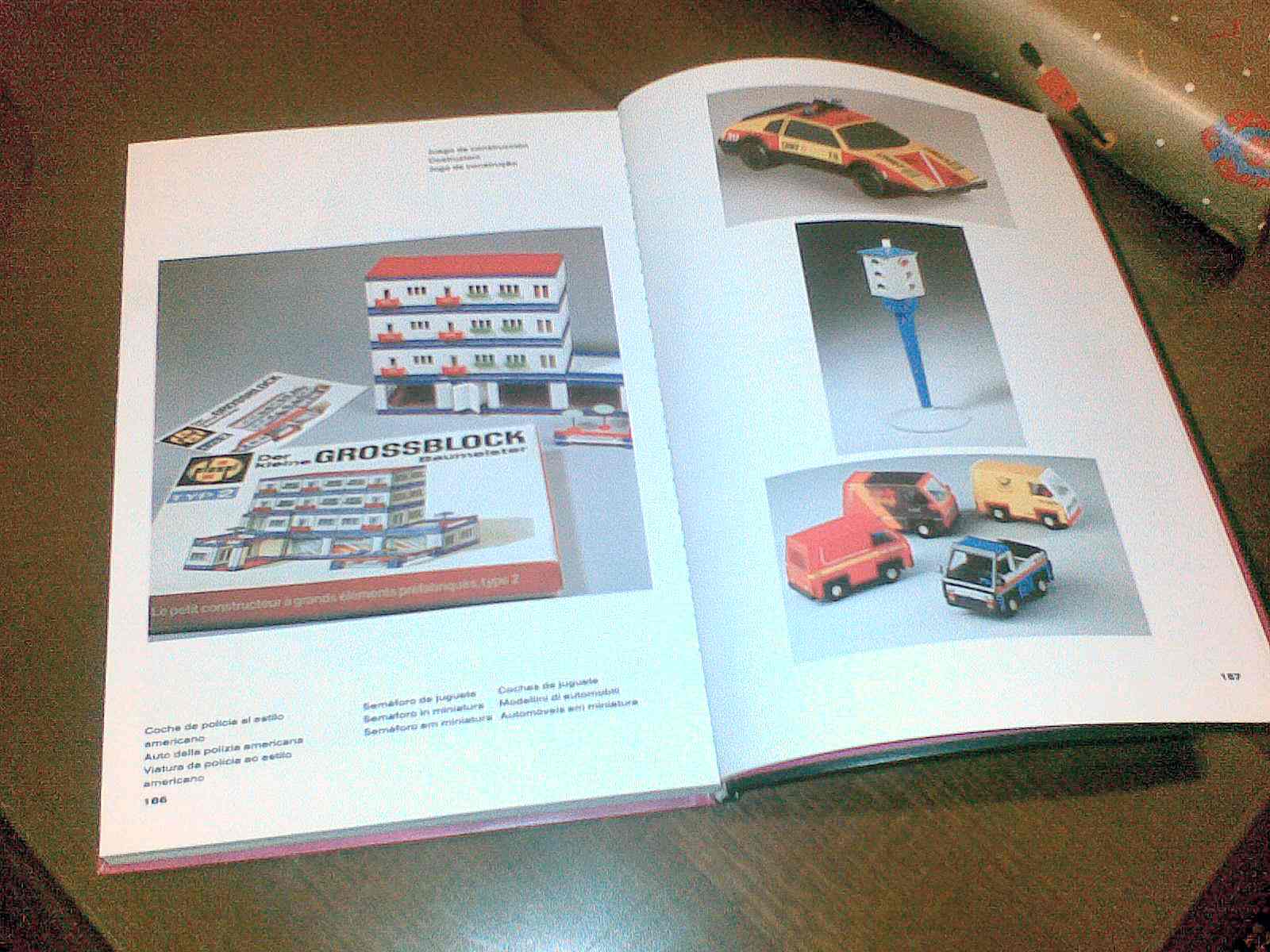
Ieri sono passato in libreria perchè dovevo fare un regalo e ho comprato anche il volumetto della Taschen 'DDR Design' Ben  7.99 € da Feltrinelli.

Carino, sembra che abbiano vissuto nel 1974 fino al 1989 oltrecortina. Ma non vi è tetraggine in questa oggettistica. Forse ingenuità e scarsa sofisticazione, ma c'era una certa sincera creatività in quello che disegnavano i progettisti della vecchia Germania Est. Metto una fotina di una delle ultime pagine -il giocattolo in alto a destra nella vecchia DDR esisteva solo come ...giocattolo. Non so se fu un bene o un male.


Monday, 5 January 2009

The new old thing..


Greetings: I've abandoned my old blog at splinder.com, and transferred the less embarassing posts here. Maybe I'll try my hand again at blogging, after three long years, who knows..